Beatlemania: Perfect Storm or Perfect Band?
By Sam Aylwin, 2nd Year History
The Beatles are arguably the greatest and most influential musical group of the last century, if not of all time. Their music has transcended time, reaching listeners across generations. The band first took shape in Liverpool in 1960, having blossomed out of John Lennon's skiffle group The Quarrymen, which formed in 1956. They are generally considered to have formed as a band in 1960, although the famous four didn’t unite until 1962, when Ringo Starr permanently took the drumming position.
'Beatlemania' is the name given to the unprecedented fan hysteria which supported the band’s meteoric rise to fame between 1963 66. Almost a year from the release of their debut album, ‘Please Please Me’ (1963), the group went from playing clubs in Hamburg to selling out arenas worldwide. They were trailed everywhere, of course, by fans, in their characteristic screaming frenzy. The term was coined in the British press in 1963, which some have claimed followed their TV appearance on Sunday Night at the London Palladium on 13 October 1963.
In 2022, Cass R. Sunstein posed an intriguing yet moot question. Was the band’s global dominance a result of their musical genius or a product of social contagion? Despite a wealth of talented bands in the early 1960s, among them The Kinks, The Rolling Stones, and The Beach Boys, whose early work was arguably every bit as accomplished, none ever achieved the level of global superstardom that the Beatles did.
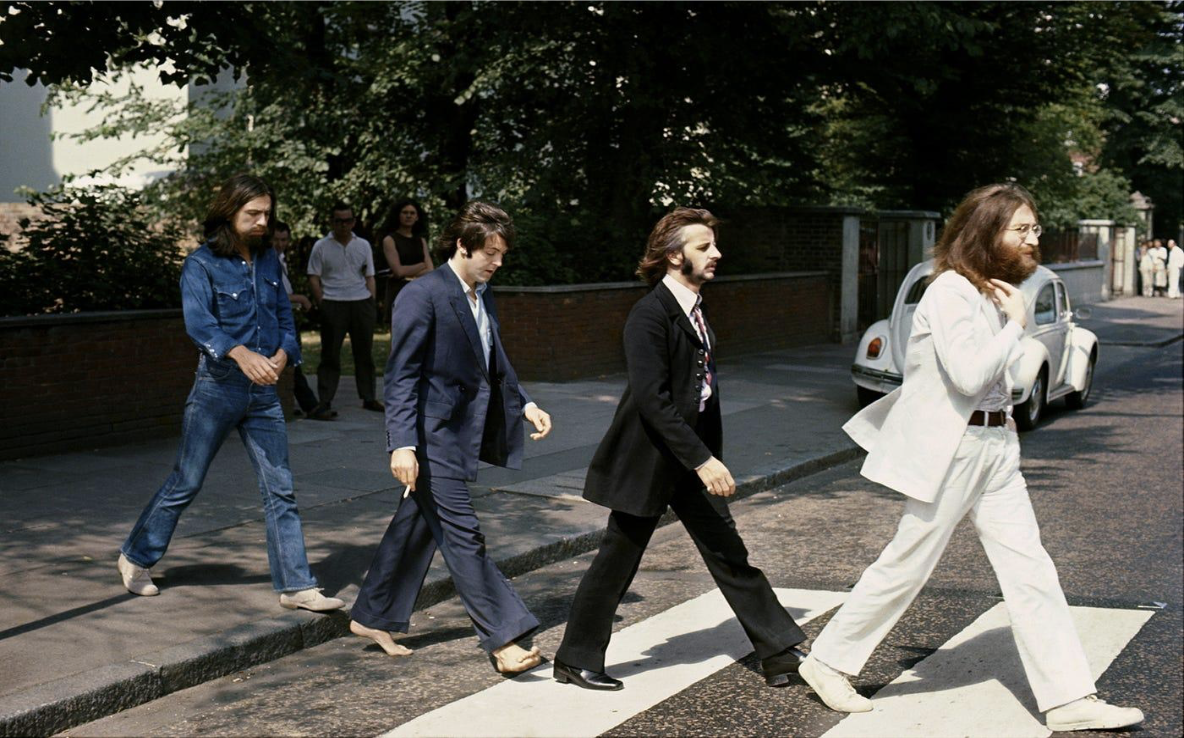
(Figure 1: seconds before the infamous 'Abbey Road' photo, credit: Medium)
In 1966, John Lennon claimed that The Beatles were 'as popular as Jesus', a remark for which he received fierce backlash. While it was widely misrepresented in the media and taken out of context, making it a more controversial moment in the band’s history, looking back at the band's chart records from 1963–66 in both the United Kingdom and the United States, the statement does not seem quite so outlandish.
Throughout the early 1960s, The Beatles broke a series of chart records on both sides of the Atlantic. In the UK, they scored their first No. 1 with "From Me to You" in May 1963, followed swiftly by "She Loves You" and "I Want to Hold Your Hand," giving them three chart-topping singles in a single year. "She Loves You" went on to become the best-selling single of the entire decade. In the United States, they set a record that has never been beaten since, occupying all of the Top 5 positions simultaneously, rounding off a year in which they placed 11 singles in the US Top 10.
So, did the music warrant such success? What exactly made The Beatles' fans become 'manic'?
Sunstein discusses several social theories that can help to explain the ‘Beatlemania’ craze. The most accepted is the concept of 'Informational Cascades', the phenomenon by which people set aside their own private judgment and follow the signals given by the actions of others. In the Beatles' case, a dedicated early fanbase in Liverpool purchased "Love Me Do," signalling popularity, which others caught on to, turning the song into an unlikely hit.
In a pre-Internet age, The Beatles also benefited from the effects of 'Reputational Cascades,' whereby people conform to crowd opinion for fear of appearing foolish by not supporting a popular act. As more people joined their growing network of fans, the value of liking the band increased, similar to how today we feel pressure to be familiar with various social and cultural trends.
The specific character of 'mania' can be explained by the concept of Group Polarisation: when like-minded people engage with one another, they tend towards extreme versions of their initial inclinations. This process can transform moderate enthusiasm into a full-blown frenzy.
All these dynamics must, however, be considered alongside simple luck, which undeniably played a part in the Beatles' story. The group was initially rejected both by the public and by the industry. Lightning struck twice; firstly when manager Brian Epstein happened to catch them at a lunchtime show. Then again, when producer George Martin, initially sceptical of their talent, was persuaded to take them on by his colleagues, who deemed it an undesirable job and wanted to avoid doing it themselves.
(Figure 2: taken from Sgt. Pepper's Lonely Hearts Club Band, credit: Tidal)
In some ways, the stars appeared to align for the group, which raises a compelling question: what if it had been a different band? Had one of the other legendary groups of the era, or some act that never quite broke through, enjoyed the same luck and operated within the same socio-economic climate as the Beatles, would the same phenomenon have occurred? Would a different partnership have developed into the songwriting virtuosos that Lennon and McCartney became?
Its an impossible question to answer, but in my view, the answer is no. Although the Beatles undoubtedly benefited from fortunate circumstances, their capacity to continually capture the hearts and minds of listeners throughout the 1960s speaks to a talent that transcended circumstance. In a decade of profound social and cultural transformation, the Beatles evolved effortlessly with the times, frequently shaping the cultural landscape as they went. Furthermore, their music is undeniably transcendental; they are the most represented act on Rolling Stone's list of the 500 Greatest Albums of All Time. To me, this suggests that the Beatles were, in many ways, inevitable. We should count ourselves fortunate to have enjoyed their music.
Edited by Zoe Lambe