Sixto Rodríguez: Back from the Dead
“Sugar man, you’re the answer that makes my questions disappear”, the lyrics that ring out at the end of the lead-off track of Rodríguez’ seminal album Cold Fact, introducing one of the (in my opinion) greatest debut albums of all time. Rodríguez’s achingly beautiful magnum opus combines dwindling folk instrumentals with powerful electric rock riffs, creating a Clapton-Dylan, revolutionary psychedelic folk hybrid. Rodríguez wrote songs about the world he knew, poverty-stricken Detroit in the 1970s, with drug abuse and homelessness rife within the city. Rodríguez writes scathing lyrics of an establishment that is failing the people, creating a social commentary that perfectly emulates the anti-establishment counterculture of the early 1970s.
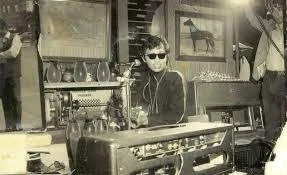
Figure 1: Rodríguez recording his second album, Crucify Your Mind. Credit: Spotify
But who was Rodríguez, and why has he remained a relative unknown until recently? With artistry comparable to the greatest musicians of the day, you would have expected his music to be a hit, but to put it simply, the American audience was not interested. Rodríguez’s first album, released by Sussex Records in 1970, which also released albums by artists such as Bill Withers, was an absolute flop, selling only a handful of copies, to the bewilderment of all the music aficionados who worked on the record. Rodríguez’s second album, Coming From Reality (1971), was equally as unsuccessful, and Rodríguez was dropped by Sussex Records, two weeks before Christmas (as he eerily predicted in his song Cause). People couldn’t understand why no one had bought the record, with producers Mike Theodore and Dennis Coffey, claiming he was one of the best artists they had ever worked with; perhaps he was too political or perhaps his music hit America at the wrong time. Rodríguez’s second album was the last he would ever create, and after its catastrophic failure, he retreated into obscurity, not to be heard from for almost thirty years, living most of his life believing his music career was dead on arrival.
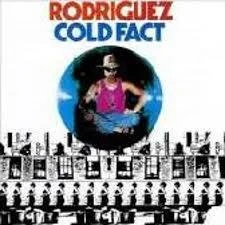
Figure 2: Album Cover for Rodríguez’s first album, Cold Fact. Credit: Soundcloud
The truth was quite different, however. Rodríguez’s music somehow found its way to Apartheid South Africa. This extremely conservative society had been obscured from much of the cultural revolution, with television being banned until 1976 for fears it was ‘communist’. It was amidst this extremely oppressed and divided community that Cold Fact (and to an extent Coming From Reality), became arguably the most influential album in Apartheid South Africa. Rodriguez’s anti-establishment lyrics spoke to the people of South Africa and helped galvanise Anti-Apartheid sentiment among young Afrikaners. It permitted Afrikaans musicians to speak out through music and inspired the creation of the Voëlry Movement in the 1980s, a genre of anti-establishment Afrikaans rock music. This music helped to capture the imagination of young Afrikaners and helped start the anti-apartheid movements among the Afrikaans community by forcing them to challenge the Afrikaner establishment.
The album was highly controversial in South Africa, with Government censorship preventing it from being played on the radio, and even led to songs being scratched off the record. However, by the early 1980s, it was considered one of the most popular albums of all time in South Africa, with estimates from the first South African record company to release Rodríguez’s music that he sold 500,000 copies.
But his anonymity prevailed; there was absolutely no information in South Africa about him, with the most popular belief being that he had taken his own life on stage. He was completely shrouded in mystery, so much so that in 1998, reporter Craig Bartholamew and Robert “Sugarman” Segerman decided to go looking for him, together starting the ‘Great Rodríguez Hunt’. Their search was not an easy one. With such limited information about him, they didn’t know where to look. They eventually set up a website, where people could put information they knew, and miraculously this site found Rodríguez’s eldest daughter, who was able to get in contact with Segerman and Bartholamew, and connect them to her father, who was very much alive. After 25 years, the mystery was over; Rodríguez had been found, working as a demolition man, who had remained in Detroit after his failed career launch.
When Segerman and Bartholomew told Rodríguez about his fame in South Africa, he was shocked; he was not only completely unaware that he was a superstar but had never seen a penny from any of his sold records. Rodríguez had lived his whole adult life in relative destitution, believing that his music had remained unappreciated. Rodríguez was flown over to South Africa in March 1998, where he played nine sold-out shows that year, finally fulfilling his destiny by performing his beloved music to an audience in awe of this enigmatic figure. After these shows, he returned to Detroit, where he continued his work as a demolition man, having to explain to disbelieving colleagues about where he had been. Rodríguez didn’t achieve fortune or fame in America; he gave away most of the money amassed by the tour to his family and friends and remained anonymous to the American people. Only in 2012, after the release of the Oscar-winning Documentary Searching for Sugar Man, did he reach acclaim in the States and finally achieve his long-awaited resurgence.
The story of Rodríguez begs some interesting questions. Could anything like this ever happen again? With social media as pervasive as it is today and endemic as it is today, I would say no. The anonymity that Rodríguez achieved, even after his discovery, would be impossible today. If one were to become a superstar overseas today, one would be made aware almost instantly. Therefore, the story of Rodríguez is truly one of a kind.
Secondly, would it truly have been better if Rodríguez had achieved success in America? To me, he seems uninterested in the wealth and fame associated with superstardom; he sought to remain anonymous even after he became aware of his adoration in South Africa. For Rodríguez, it seemed the perfect outcome; he was able to enjoy the success of his music and then retreat into mystery and back to his simple life.
Whatever the answer to these questions, no one can deny that the story of Rodríguez is truly bewildering and fanciful. How was someone so impactful both culturally and politically able to remain completely unknown for 25 years? A question that will never be answered.
For anyone wanting a more detailed description and some truly breathtaking viewing, watch the 2012 documentary Searching for Sugarman.