
By Charlotte Wyatt, 3rd Year English and History
Ever wondered about the woman behind the name of our campus building? What exactly is Ada Lovelace celebrated for? What did she do during her lifetime? Well, on her 210th birthday, I shall take you through Ada’s beginnings, her fascinating parentage, her achievements and her later life to investigate the great mathematical achievements of such a formidable woman and how her legacies have stood the test of time.
Ada King, Countess of Lovelace, was born Augusta Ada Byron on 10th December 1815 to the famous poet Lord Byron and Lady Annabella Byron. Ada could be considered the 1800s equivalent of your celebrity nepo baby. Shortly after Ada’s birth, the Byrons legally separated, and Lord Byron started travelling abroad again (as he usually did), where he would die of Malaria in Greece in 1824, when Ada was just 8 years old. Her mother, Lady Byron, was actively involved in social causes such as prison reform and the abolition of slavery and even established a school – her unconventional and radical interests for the time were something that was inevitably passed on to Ada. Her mother took full control over her education and encouraged her passions in logistics and mathematics – not your typical 19th-century girl's education!
As the Byrons’ only child, Ada was given all opportunities to excel, and soon, in 1833, Ada was introduced to Charles Babbage and showed an interest in his machinery. Babbage would come to tutor Ada in her mathematical endeavours, particularly with what we consider to be the first computer, the Analytical Engine.
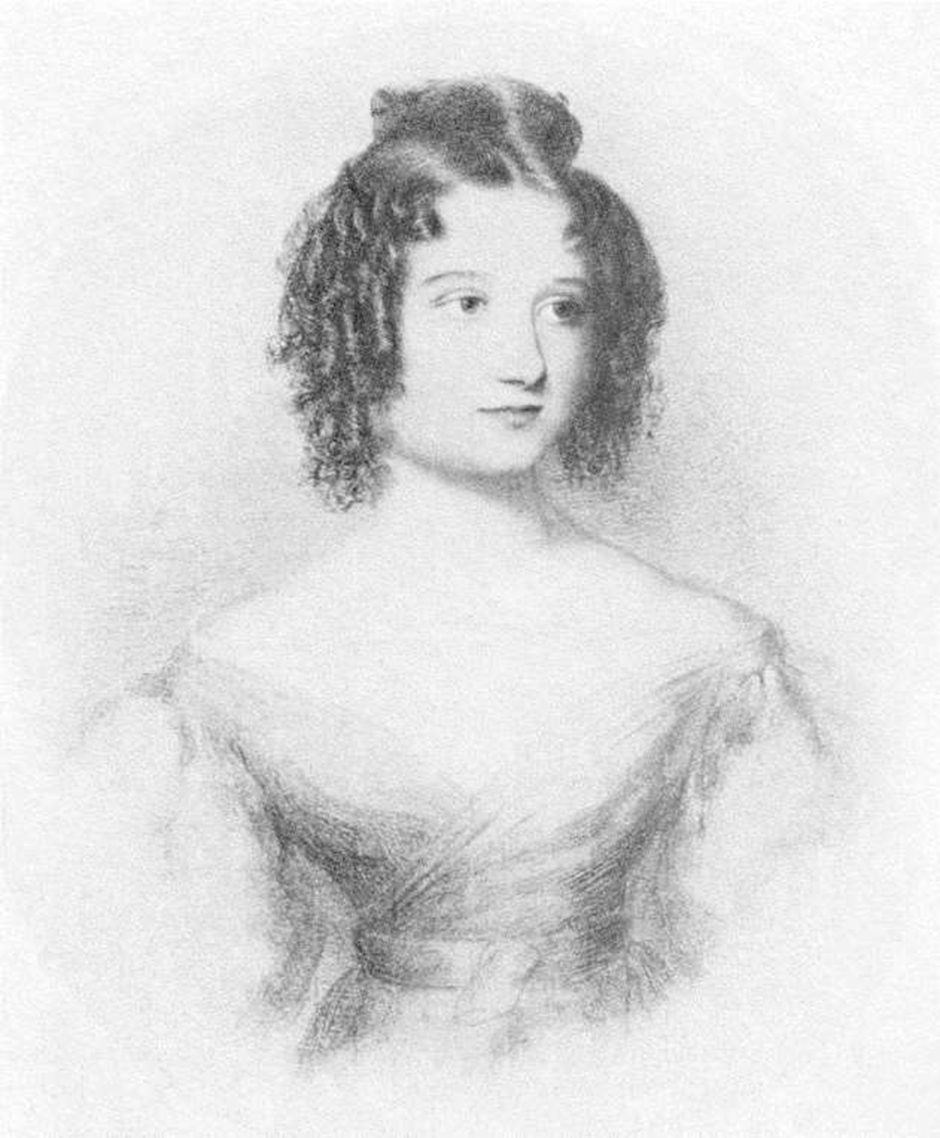
Augusta Ada Byron, aged 17
However, Ada would use her position to acquire an advantageous match with William King, 8th Baron King. Ada would later become Countess Lovelace in 1838 due to an earldom in the family. Despite having much on her plate with a marriage and children, Ada defied the expectations of her gender and class in continuing mathematical work.
In 1843, Ada gave the first early, detailed and calculated notes on early computer programming in her comparison to the patterns of a weaving machine that could complete a design and how this could be used in the Analytical Engine. This meant the engine could not only calculate codes or numbers but also form letters and even musical notes! Ada’s workings come into Babbage’s Analytical Engine through her translations in French from his engineer into English, as well as adding her own notes and signing them ‘’A.A.L’. Sadly, however, Babbage didn’t receive enough funding to complete the Analytical Engine, and Lovelace’s notes were left to be rediscovered in the next century.
However, at the end of her life, Ada Lovelace did visit the Great Exhibition in 1851 alongside Babbage, despite the Analytical Engine not being able to be displayed there. Lovelace’s appearance further emphasises her fascination and passion for science, technology and innovation that was maintained throughout her life. Even at the end, Lovelace still advocated for technological advancements and their celebration.
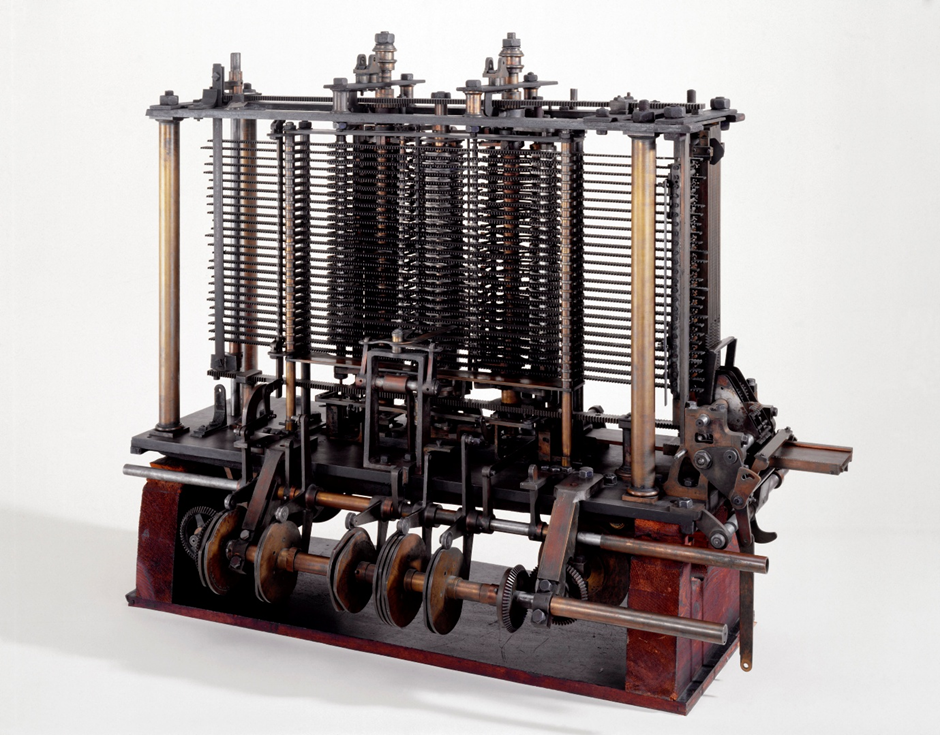
Babbage’s Analytical Engine, 1834-1871
Despite her death at the young age of 36, Ada’s legacy lives on, whether this be through her inventions and mathematical equations, monuments and even our very own campus building. In 1953, over 100 years after her death, her writings were republished in a book on digital computing and her early contributions to it and Lovelace’s idea of the first computer language. In fact, in 1979, the U.S. Department of Defence named a computer language ‘’Ada’’ to celebrate her effort in the field. The Analytical Engine would eventually be completed in 1910, long after Lovelace’s and Babbage’s deaths. Lovelace’s notes even connected and inspired Alan Turing’s work, which was later brought to film in The Imitation Game (2014) and played a crucial role in the development of the first modern computers in the 1940s.
In recent years, the Science Museum’s Ada Lovelace exhibition was held to celebrate the bicentenary of Ada’s birth in October 2015, in which many paintings and artistic works presenting Ada as well as her mathematical achievements were on full display to deliberately present the tension between 19th-century culture and restrictions to Ada Lovelace, whilst still being a figure of female empowerment. Ada Lovelace remains a key role model for young women and girls with a keen interest in and pursuit of science. A true example of celebrating women in STEM, if you will. Therefore, it should seem so clear why we should celebrate Ada Lovelace and hold her name in university institutions that aim to present the same passionate values that she held.
So, the next time you find yourself walking past the Ada Lovelace building on your way to your lecture, think about the woman behind that name, her great achievements and why we celebrate her. Ada Lovelace connects the past to the future through the beginnings of computer programming - something that seems so modern. Her translations and detailed notes meant that her work became immortal and of vital importance in technological advancements in the 20th century.