By Ben Steele, 3rd Year History
Alcibiades has been immortalised as a subject within the narrative of Socrates life. Through an examination of his biography, this article argues that his association with Socrates was among the least fascinating aspects of Alcibiades’ character. Alcibiades became significantly studied during the neo-classical artistic period. The debauchery of a young Alcibiades and the image of his death became prominent through the neo-classical period of roughly 1750-1830. However, the licentiousness of Alcibiades was not limited to the brothels of Athens, as portrayed by neo-classical artists. The political impacts of Alcibiades’ promiscuous life were largely overlooked in art, despite the roles he played in the Peloponnesian War as a statesman, cuckold, admiral, and megalomaniac.
Born in 450 BC into the notable Alcemaeonidae tribe of Athens, a political career was inevitable for Alcibiades. Following the death of Alcibiades’ father, Cleinias, he was raised in the household of the formidable Pericles, Athens’ de facto leader of the democracy in the 440s. In this prominent household, Alcibiades grew to be extraordinarily handsome and exceedingly vain. His immorality became notorious throughout Athens, and Socrates kindly took Alcibiades under his mentorship, hoping to drive out his vanity. From the valuable teachings of Socrates, Alcibiades learned manipulation and oration, but not the integrity Socrates intended to instil. The neo-classical artists focused entirely on this period of Alcibiades’ life, consequently reducing our understanding of him to a mere failure of Socrates’ teachings. Within the art produced, Alcibiades and Socrates are depicted in a pederastic relationship; this misses the importance of questioning what Alcibiades’ time with Socrates instilled in his Pais.
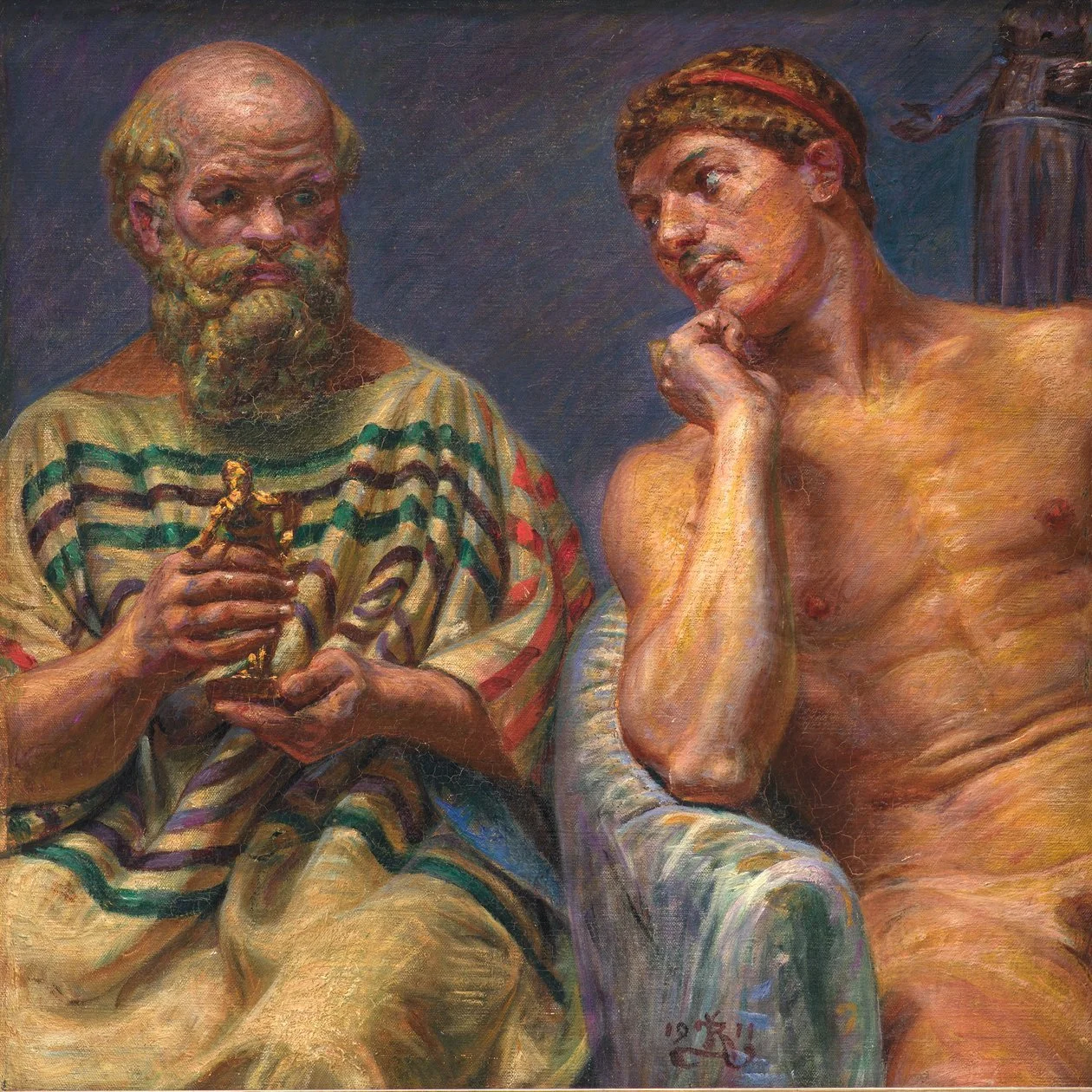
Figure 1 : Alcibiades and Socrates, Credit: Meisterdrucke
To understand Alcibiades is to know that the levels of both his degeneracy and appeal were exceeded by no other. Alcibiades’ political rise foreshadowed what was to come. Through a combination of charm and manipulation, he sought to undermine the Athenian statesman Nicias and establish his own notoriety within the Ecclesia, the Athenian democratic assembly. Alcibiades secretly met with the Spartan delegates prior to their second declaration to the Ecclesia. Here, Alcibiades persuaded the Spartans to denounce their diplomatic authority, he then ruthlessly questioned the Spartans integrity and denounced their character. Alcibiades was praised for his political cunning and charm as a result, while simultaneously making an enemy in Nicias. The rise of Alcibiades is thus indicative of the cunning Socrates instilled in Alcibiades in his formative years.
In 415, the adventure that would define the remainder of Alcibiades’ life truly began. Delegates from Segesta, modern-day Sicily, approached the Ecclesia promising wealth in return for military assistance in their war against Selinus. Alcibiades saw an opportunity to make a name for himself. Through powerful declamations, Alcibiades convinced the Ecclesia to assemble an expansive army, much to the anger of his political rival, Nicias. However, during the preparations for the voyage, the phalluses of the Hermai statues throughout Athens were mutilated. Given Alcibiades’ reputation for hedonistic excess, he was accused of the desecration. As a result, Alcibiades was ordered to stand trial for asebeia (impiety) following the expedition, a charge that could result in the death penalty. Shrewdly, Alcibiades escaped to Sparta.
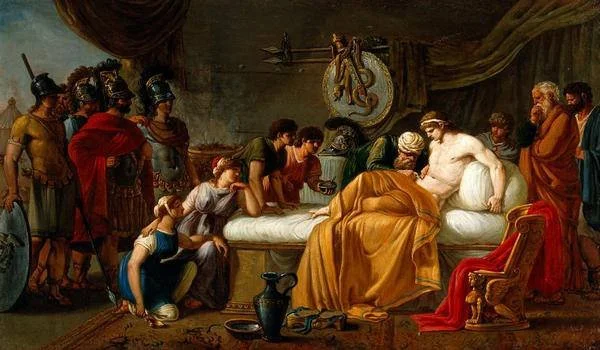
Figure 2: An injured Alcibiades, Credit: VADS
The Spartan’s accepted their enemy among the homoioi in exchange for his advice on defeating the Athenians. Using his silver tongue inherited from Socrates, Alcibiades exaggerated the aims of the Sicilian expedition. He claimed that Athens aimed to conquer Sicily, Italy and Carthage. Through his exaggeration, Alcibiades persuaded the Spartans to intervene in Sicily, resulting in a disastrous campaign for Athens. More damning still was Alcibiades’ advice to establish a permanent Spartan fort at Decelea. This stood ten miles from Athens, and the strength of the Spartiate forces forced Athens to rely on its naval empire to supply the city for the remainder of the war. Not only did this destroy Athenian moral but allowed for the Athenian empire (the Delian league) to revolt. By 412 however, Alcibiades had destroyed his relationship with the Spartans. While Agis II, King of Sparta, was stationed in Decelea, Alcibiades seduced his wife, Timaea and fathered her bastard child Leotychides. Alcibiades’ promiscuity prompted Agis to call for his death. Fortunately for Alcibiades, he caught wind of the order and yet again escaped condemnation. The fulfilment of Alcibiades’ immorality on the political stage raises the question of why this was not deemed worthy of study by Neoclassical artists. Alcibiades’ self-indulgence was depicted by Neoclassical artists in the famous scene of Socrates taking Alcibiades away from a brothel in Athens. The Spartan episode is both more valuable for understanding Alcibiades, and the politics of the Peloponnesian war. However, due to the inclusion of Socrates, the paintings diminish Alcibiades as only the mentee of the more significant Socrates.
Tissaphernes, a Satrap for the Persian empire, accepted Alcibiades as an advisor. Alcibiades’ policy suggestions were once again shrewd and cunning. Persia’s role in the conflict was one of indirect influence in the Aegean, primarily through funding the Spartan forces. Alcibiades advised Tissaphernes to prolong the war through reduced funding, allowing Persia to gradually weaken both the Spartans and Athenians. Ultimately, this would leave Persia in a position to assert its dominance over the Hellenes, as it had attempted to do since the Greco-Persian skirmishes from 490’s-450’s. While in Persia, Alcibiades secretly contacted his friend Pisander in Athens. Alcibiades claimed that he could secure Persian support if democracy were deposed in Athens. Pisander, alongside other oligarchic supporters, helped replace the democracy with an oligarchy in 411. The influence of Alcibiades over the Athenian political system even from exile is indicative of how power was controlled and understood in antiquity, which was overlooked in the neo-classical era.
Alcibiades, under the pretence of having influence in Persia, was appointed an Athenian general. All charges were dropped; his name was cleared. Despite this, Alcibiades did not return to Athens, determined instead to return in a blaze of glory. In the battles of Abydos and Cyzicus, the Spartan fleet was destroyed under the cunning command of Alcibiades. Sparta was forced to vie for peace, which was rejected by the Athenians. Alcibiades finally earned his grandiose return to Athens in 407. He was then elected Supreme Commander of Land and Sea. The ascent of Alcibiades and his return to Athens would have been a grandiose artwork for Neo-Classical artists. The themes of civic virtue and heroism of neo-classical artwork are seen in Alcibiades’ return home yet was disregarded by the artists.
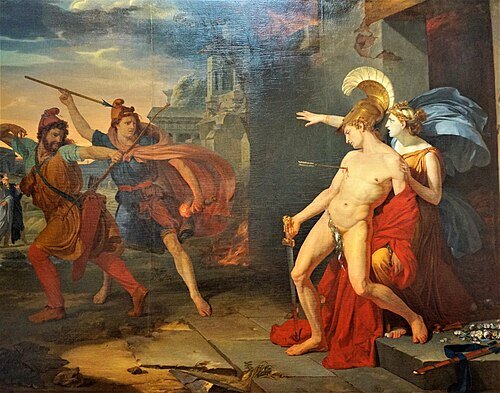
Figure 3: Alcibiades death, credit: Wikepedia
From this Olympian peak Alcibiades fell, at the battle of Notium in 406. The Athenian fleet was briefly left in control of Antiochus while Alcibiades attended to affairs at Phocaea. Alcibiades left Antiochus one command: do not engage Lysander, commander of the Peloponnesian fleet. Antiochus immediately disobeyed, losing the ensuing battle, his life, and the Athenian fleet. Alcibiades was blamed for the defeat and exiled. He fled to Persia, where he was eventually hunted down and assassinated under the orders of Lysander. The death of Alcibiades is the only other episode of his life studied by Neoclassical artists. The image of Alcibiades shot, trying to fight many men while his house burned is a fascinating image. However, it once more represents Alcibiades’ failings, this time physically.
The neo-classical fascination with Alcibiades was not unfounded. His character was rich and his personality distinct; however, there was more to be studied than his relationship with Socrates. The image of beauty, arrogance and promiscuity depicted by artists followed Alcibiades throughout his life. Alcibiades’ guileful life and oration as a gifted statesman and commander can be forgotten amid the controversies of his life. The values of the Neo-classical period focused on rationality and patriotism to learn from antiquity. Alcibiades’ enacted the antithesis of these values, resulting in the disregard of a fascinating character within ancient Greece. Alcibiades’ moral failings accompanied his continual political success; thus, Alcibiades’ biography is an exemplar of how immorality can ultimately destroy cunning.
Edited by Bea Vivian