By Henry Fennell, 1st year History
The New Order is purely counterfactual in premise, yet its narrative and overarching purpose as a piece of fiction is analytical. Axis victory is established only so that the consequences of Nazi ideology, and its historical relationship with Europe, can be examined under the most extreme conditions. The year is 1962, and Germany is a rotting carcass of a state, efficient only at inflicting catastrophic violence upon the colonial population it subjugates in Eastern Europe.
In the midst of a multilateral cold war between the United States, the Japanese Empire, and Nazi Germany, the progression of the story generally follows the attempts by various nations to manage the collapse of Germany whilst preventing total nuclear war, or take advantage of this moment of German weakness to crush that empire entirely. Despite the extraordinary state capacity of each of the great powers, years of fierce competition have left each riven with internal strife, brittle and exposed to the consequences of their own grand strategy. The Zaibatsu, dynastic conglomerates of Imperial Japan, and the great industrial cartels of Germany have caused the former Axis powers to stagnate economically. By contrast, the repeated deferral of civil rights reform, as well as emerging fascist movements in its Southern States, leave the US in a political deadlock, unable to harness its enormous strategic potential against its rivals as a result.
Unlike Hearts of Iron, upon which The New Order was built, it cannot be described as a ‘war game’. Rather, it runs primarily as a political simulator with a range of branching narrative outcomes. War does feature within the game, but more central to the narrative are proxy conflicts, economic competition, diplomacy- avenues through which competition between states can occur without the threat of mutually assured destruction.
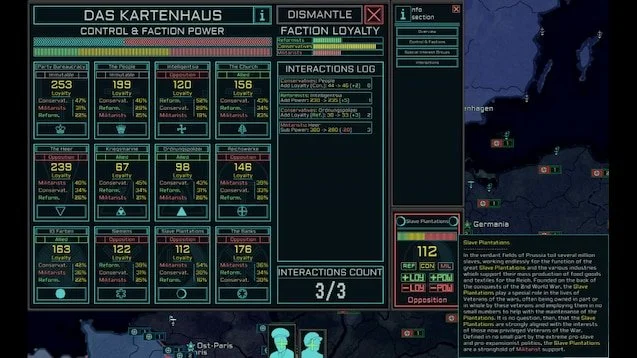
figure 1: The New Order Game Play, source : Steam Community
By some margin, The New Order finds its greatest coherence as a piece of fiction in its emphasis upon distinct, recognisable historical structures, an international system, great power rivalry, imperialism and subjugation, and the coercion of the player into these themes via the interactive medium. The player's role is always somewhat ambiguous, whether it’s in the state itself, political leadership, or even as the “spirit of the nation”, it is never elaborated on. Regardless, the interest of the state in self-preservation and the interest of the player in continuing to play are convergent.
As the game progresses, the user learns how to outmanoeuvre a geopolitical rival, stage a military intervention, and balance a budget, gradually beginning to think as the state they play as.
The alt-history setting, despite its implausibility, reinforces the tension of playing as a world and historical actor. There is no precedent set for the actions one has to take, and with it comes the surreal, lingering, gnawing unease that sometime in the future, any one of those decisions could be picked out as a pivotal or catastrophic mistake.
Still, almost every divergence that we are confronted with is based on some shelved or scrapped proposal that was genuinely made. The re-creation of the State of Burgundy, from strips of French territory and the entirety of Belgium, is one such example. When viewed on a Political map, it looks unnatural; it is a polity that adheres to no natural borders, no ethnic or linguistic group, run by fanatics considered too politically unstable even for the German Nazi Party. An artificial client state in the heart of Western Europe, Burgundy is nothing but another colonial state, running down the Meuse River.
Burgundy demonstrates the New Order's understanding of European Romantic Nationalism. Arbitrary, unspeakably violent, clad in the auspices of medievalism, tradition, continuity, and historical justification. It functions like all Colonial states, as a testing laboratory for state-making, for depositing overzealous or troublesome statesmen, and for the extraction of both labour and raw materials.
It isn’t the only one, with much of Eastern Europe an amalgamation of German-ruled Reichskommissariats, lands conquered but not integrated into the German state. This arrangement of territory by the game is a direct imitation of Generalplan-Ost, the design to ethnically cleanse almost the entirety of the Slavic population from Europe, and settle Germans in their place, in part inspired by the United States’ “manifest destiny” and Westward expansion. This, unlike the Burgundian state, was not a shelved proposal, but rather the lynchpin of motivation for Nazism as an ideology, and directly implemented in its early stages by the Nazis in the real world. The historian Adam Tooze, in The Wages of Destruction, refers to this as “The Grand Strategy of Racial War”, the Nazi pursuit of world-power status through “the last great land-grab in the long and bloody history of European colonialism.” The New Order suggests that had such a future come to pass, it would have been a mutilated victory for Germany. A future in which senseless violence would lead to nothing but its own eventual disintegration.
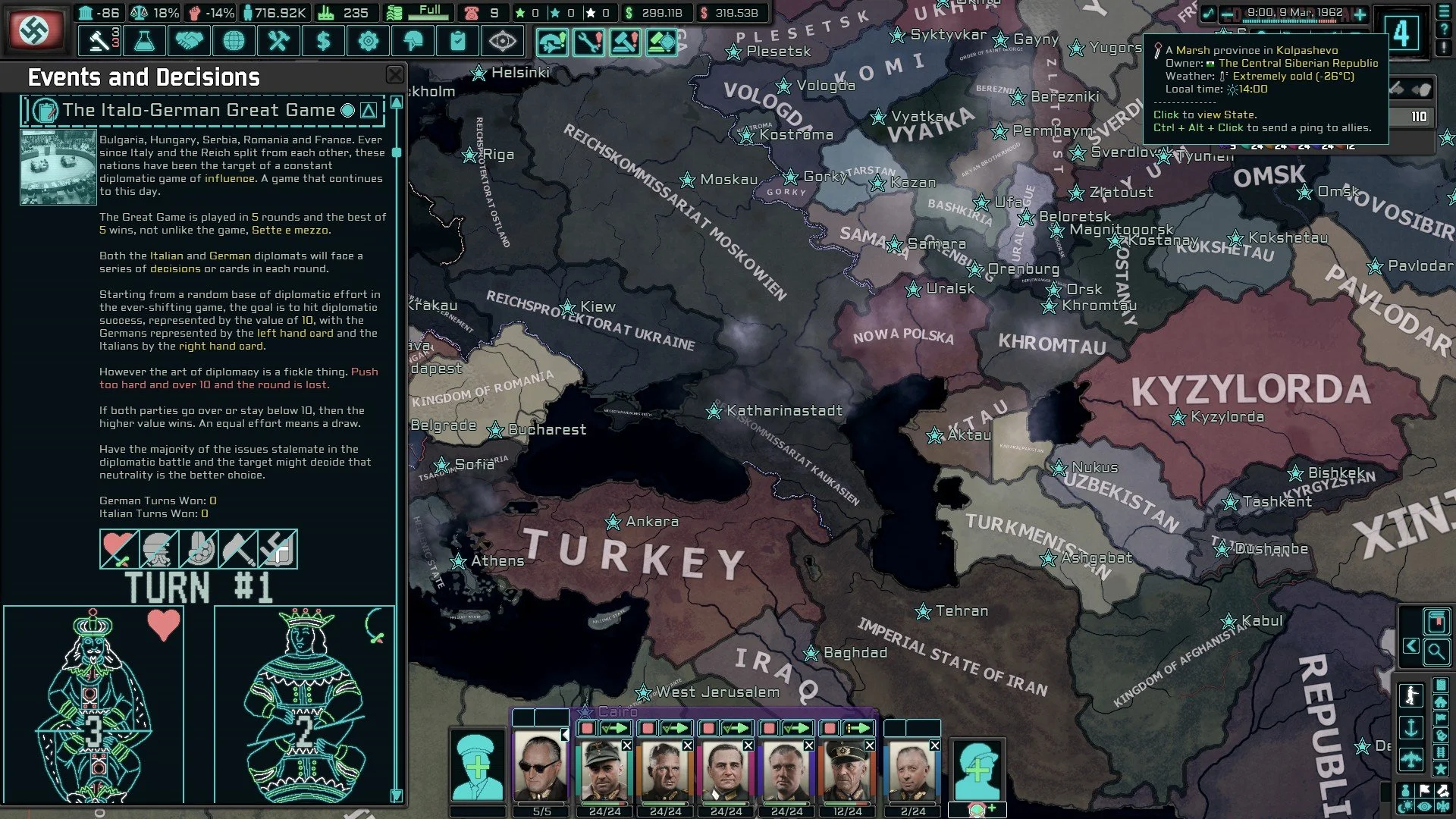
Figure 2: The Games Map of Europe , source : War Gamer
Although describing The New Order as a ‘Horror Game’ doesn’t fully encompass the entirety of the game's complexities, it is the only nomenclature that seems apt. The player is forced to engage with a world on the brink of destruction, whilst managing the state’s welfare budget. It is an experience which intentionally produces hopelessness and frustration through tedium, where each small decision feels useless to any grander ambition, and where even the overwhelming power and might of modern nation-states cannot achieve desirable outcomes. Despite being alternate history, it is a categorical rejection of the power fantasy that both video games and alt-history often present to those who engage in them.
It is difficult to come to an optimistic or light-hearted conclusion about The New Order. It is a piece of art with a bleak conception of the world, of history, and of humanity, but one that is highly informed by the events which it mirrors, and by the historical structures it imitates. The emotional pathos that The New Order is able to evoke makes it unique and genuinely powerful as both a work of fiction and a commentary on history.
edited by Sam Aylwin