
By Ariella Zimmerman, 3rd-Year History
Druckmann and Naughty Dog use the history of the Israel-Palestine conflict as a basis for the schism between the two established political factions in Seattle. The Washington Liberation Front, with its seemingly endless military funding, organisation, and military hierarchy, represents the state of Israel. The Seraphites, a religious faction of Seattle with a cult-like devotion to their messianic saviour, referred to as ‘the prophet,’ ‘the woman,’ or ‘she,’ represent the Palestinians.
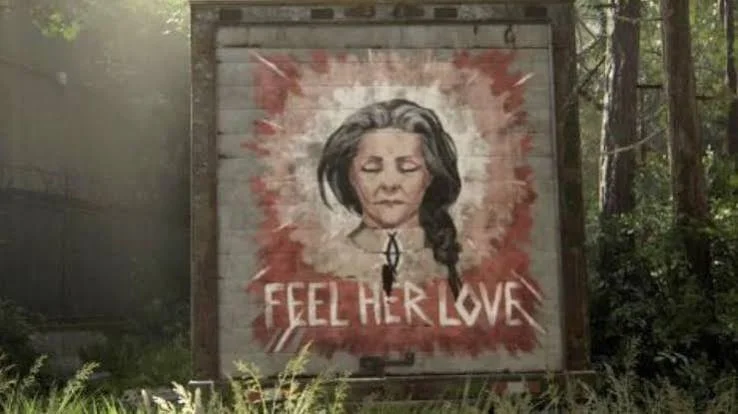
Figure 1: Image of the Seraphite Prophet, credit : naughty dog
The depiction of the Seraphites throughout the game is that of a backwards, religious cult that uses violent extremes to ensure the continuation of their religious zealousness. They are recognised by the player due to their unique brutality, usually hanging their sacrifices by the neck and freeing them of their sins by cutting them open. Their messiah inspires many of their lifestyles; her teachings were meant to promote a life symbiotic with nature, believing that mankind’s advancements caused the fall of humanity. Religious phrases such as “feel her love” are scattered over the playable area.
Druckmann’s specific understanding of the conflict is imperative to understanding why violence is presented through the symbolism of Israel-Palestine. Druckmann himself is an Israeli who grew up in the West Bank throughout the Second Intifada. When he was 10, he witnessed footage of a lynching of two Israeli soldiers in Ramallah.
In an interview with the Washington Post, he explains that he felt an intense hatred for the Palestinian mob, stating that “if I could just push a button and kill all these people that committed this horrible act, I would make them feel the same pain that they inflicted on these people." Druckmann frames the Israel-Palestine conflict as a cycle of violence to ‘safely explore’ these feelings of revenge that he so explicitly speaks of himself.
Druckmann's framing of the conflict allows the players to picture the hostilities as committed equally by both sides, where both the WLF and the Scars are equally implicated in the violence. This centrist position on the conflict allows for a passive and almost disregarded understanding which only perpetuates the tensions.
Figure 2: Washington Liberation Front, Credit: The Last of Us Wiki
In the game, violence emerges as the clear symbol which conveys Druckmann’s belief that ‘no one is entirely evil or entirely good,’ so that every act of revenge or violence in the game justifies this ‘cycle of violence’ by drawing from its complexity. Whilst this may be accurate for a society such as that of The Last of Us, where the societal expectation is violence, this cannot be contextualised within modern society.
Representing Israel-Palestine as a symmetric ‘cycle of violence’ benefits one side of the conflict much more than the other, which only allows it to continue. Through this portrayal, Druckmann could be interpreted as suggesting that the violent acts of the Israeli governmentare justified by the conflict’s complexity. The suggestion that both sides are morally equivalent and have the same abilities, enforces an indifference towards a solution as people begin to believe that it may just be human nature.
Isaac Dixon, in The Last of Us Part II, is the commander of the WLF, who leads the organisation dictatorially, using violence, executions, and torture to ensure a blind following of his malign philosophies. To understand Isaac, we must look briefly at the history of the conflict between the WLF and the Seraphites within the game.
Before the events of the game, the governmental organisation known as FEDRA used Seattle as a quarantine zone against the outbreak of the cordyceps virus. FEDRA governs Seattle harshly, being referenced throughout the game as an imposed dictatorship. The WLF are a paramilitary group originally created to take down FEDRA, which they do successfully.
As the new leader of Seattle, Isaac’s leadership falls into similar patterns as that of FEDRA’s, with severe isolation and xenophobia towards the Seraphites. The Seraphites see the WLF as equally fascist as FEDRA; they organise a bombing of a WLF supply platoon, which they see as an equal retaliation for the WLF’s hostilities. This is the catalyst for an all-out civil war.
The WLF response can only be described as overly aggressive, with members of the WLF taking sadistic pleasure in torturing and killing Scars. When a ceasefire is reached, it does nothing to temper resentment between both sides. Isaac’s execution of the Seraphites’ prophet changes the course of the conflict as it made her a martyr; through Isaac’s leadership, members of the WLF internalise his belief that the Scars are less than human, encouraging the doctrine that a genocide of the Seraphites is the only way to ensure peace.
The commonalities between this conflict in The Last of Us Part II and that occurring between Israel-Palestine are inescapable. The WLF’s retaliation against the Seraphites mimics the common phrase which is used to justify Israel’s aggressive counterattacks: ‘every country has the right to defend itself.’
What is increasingly interesting is the way in which Druckmann uses characters to make the players sympathise with both sides of the conflict. As much as the character Lev in The Last of Us Part II is a positive representation of the Seraphites, it is interesting to see how he is presented as ‘one of the good ones,’ who rejected their belief system and ran away from home; there is no other palatable Scar that we as the player encounter.
However, when the player plays as Abby, we build connections, relationships, and friendships with other WLF members, who are all presented in a positive light, ‘fighting for their cause.’ The important thing to note here is how Druckmann uses Lev as Abby’s ‘humaniser,’ whereas Lev stands against what the Seraphites truly believe.
This is also interesting when looking at the name Lev itself, which in Hebrew means heart. Giving the Seraphite character a Hebrew name almost makes it seem like Druckmann must make the ‘good’ Seraphite have a connection to Israel, and whilst this could have been a compelling narrative technique to represent how Lev gives Abby ‘heart,’ it plays a very important part in understanding the symbolism of Israel within the narrative.
This is because it represents how Druckmann based the idea of violence and conflict on his knowledge of Israel, and whilst he claims that his understanding of the conflict is nuanced, as we see through potentially accidental messaging the Seraphites (Palestinians) will always be presented much more negatively than the WLF (Israel).
In the game, the conflict results in a complete and utter destruction of the Seraphite Island, Haven. The WLF lost their leader, Isaac, and the aftermath of the conflict is never shown. Whilst this ending can be understood as a representation of how endless violence leads to mass destruction and loss of life, it can also be interpreted through a different lens. When implementing the symbolism of the Israel-Palestine conflict, one could assume this is Druckmann’s idea that the only way to ensure peace in Israel is to get rid of Palestine altogether.
References
Official last of us podcast - beyond part II https://open.spotify.com/episode/3wM6hUvwTaE7n0jRLg6tux?si=29cad94b582a49e9
The making of the Last of Us part II; grounded documentary
https://www.youtube.com/watch?v=SC3C7GMMfDU
The Not So Hidden Israeli Politics of ‘The Last of Us Part II’ By Emmanuel Maiberg
https://www.vice.com/en/article/the-not-so-hidden-israeli-politics-of-the-last-of-us-part-ii/
Moral distress in The Last of Us: Moral agency, character realism, and navigating fixed gaming narratives By Karoline A. Anderson
https://www.sciencedirect.com/science/article/pii/S2451958821001111
Transcript: The Path Forward: Video Entertainment with Neil Druckmann - The Washington Post
The Last of Us Part 2 Analysis – The Hero’s Journey By Matthew Gazso
https://spiralculture.wordpress.com/2021/01/05/the-last-of-us-part-2-analysis-the-heros-journey/
Why The Last of Us’ Connection to the the Israeli-Palestinian Conflict Is Creating Controversy By Barry Levitt
https://time.com/7275781/the-last-of-us-controversy-israel-gaza/
Can Israel still claim self‑defence to justify its Gaza war? By Jehad Alshrafi
https://theconversation.com/can-israel-still-claim-self-defence-to-justify-its-gaza-war-257822
The Last of Us Wiki