‘We’re all stories in the end’: 62 years of Doctor Who
By Eleanor Flower, 3rd Year English and Classical Studies
On 23 November 1963, families around Britain sat down in front of their televisions to watch BBC One’s latest science fiction drama. Proposed as a didactic family adventure, audiences would follow schoolteachers Ian and Barbara as they travelled throughout history in the company of a crotchety old man and his child genius granddaughter. However, even within a year, this concept had become completely transformed, and Doctor Who now remains the longest running science fiction show in history.
Produced by Verity Lambert and directed by Waris Hussein, ‘An Unearthly Child’ met a lukewarm reaction with the public, due in part to the assassination of President Kennedy which interrupted the initial broadcast. However, the show’s second serial told a very different story: instead of a traditionally didactic historical, The Daleks took place on a futuristic planet which had been devastated by nuclear war. The narrative follows the core cast as they are faced with a dying planet and people as they confront a villain which has been so corrupted by the physical and emotional consequences of war that they are reduced to mutated vessels of hate within an armoured shell. This catapulted Doctor Who towards unprecedented fame.
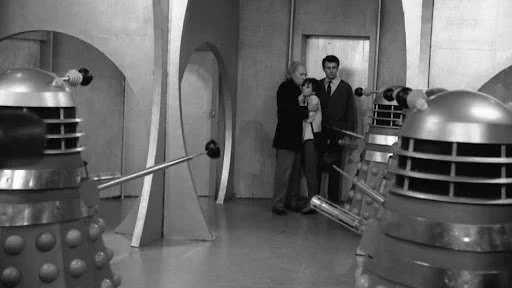
Image credit: BBC, Doctor Who, ‘The Daleks’ (1963)
Since then, the show has utterly transformed both itself and the media landscape in which it exists. Its iconic (if laughably primitive) set design, villains and charismatic main character helped to establish the iconic retrofuturistic aesthetic that has become emblematic of twentieth century science fiction from Star Wars to the works of Ursula K Le Guin. Furthermore, its pioneering ‘monster-of-the-week’ format revolutionised generic convention for serialised television, and has established tropes and imagery that have over time become idiomatic.
In 1989, Doctor Who was not commissioned for a new series, and would not air on television again for another fifteen years. Yet in spite of this, fans continued to remain active in its absence. Throughout the so-called ‘wilderness years’ of 1989-2005, an uncountable number of official and fan-made novels, audio dramas and stage plays were produced, many of them being heralded as some of the greatest works of science fiction of the era—and others being considered some of the worst. To borrow from the mythology of the show, the fandom around Doctor Who had become in many ways regenerative; constantly evolving, transforming and reimagining not just itself, but the world around it.
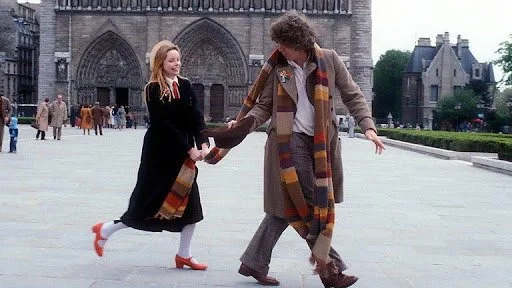
Image credit: BBC, Doctor Who, ‘City of Death’ (1979)
In 2005, Doctor Who was once again picked up for TV under the helm of longtime fan Russell T Davies and has aired consistently since. Under this new iteration, the show once again proved itself simultaneously revolutionary, and nostalgic. Writers who had grown up on the show were now being offered the chance to contribute their own ideas, and the show became a transformative crucible of old and new, at once the same and utterly different from that first narrative of an old man in his impossible blue box.
Across its 62 years of history, Doctor Who has been subject to uncountable controversies, but at its core retains an identity of transgression both on and off-screen.
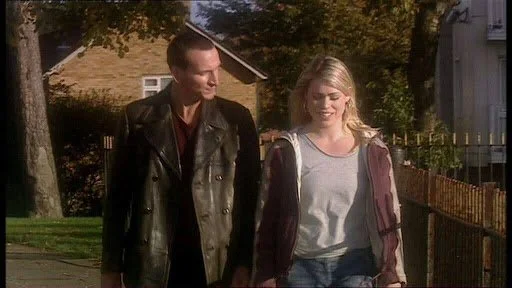
Image Credit: BBC, Doctor Who, ‘Rose’ (2005)
Edited by Scarlett Bantin