‘One Cannot Have Too Large a Party’: Jane Austen’s 250th Birthday
By Scarlett Bantin, 3rd Year History
250 years ago, on 16 December 1775, Jane Austen was born in Steventon, Hampshire. The seventh and youngest child of George Austen, a reverend and tutor, and his wife, Cassandra Leigh. Austen grew up in a busy gentry family, surrounded by wealthy and well-connected extended relatives. Her fairly modest upbringing in Steventon fostered a vivid imagination, while her later experiences living in the Georgian gentry circles of London and Bath left her well-equipped to write the witty and acerbic social commentary that her peers found in her novels.
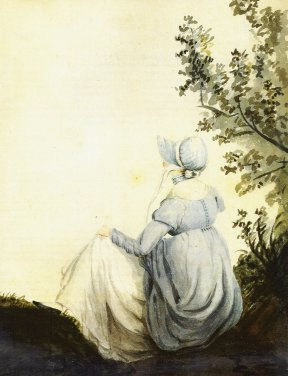
Watercolour of Jane Austen, originally by Cassandra Austen
There is some trouble in truly knowing who Jane Austen was as an individual. Thousands of her letters were burnt by her sister, Cassandra. As she became more famous for her literary works, her family were keen to protect their own reputations, by propagating the narrative of a quiet and modest Aunt Jane, who was content to remain in the domestic sphere of her family. Uncovering her true character has therefore been the work of much literary, historical and interdisciplinary study, while numerous biographies only echo the words of her family.
What we do know however, is that as a young child, Austen received little formal education, as was typical for women in this period. She instead spent her time performing plays with her siblings and developing an early love for storytelling, writing early satirical texts, like The History of England and various pieces that would form her Juvenilia. As a young woman in the 1790s, this passion developed into a dedicated craft, writing such novels as Elinor and Marianne (published as Sense and Sensibility in 1811) and First Impressions (published as Pride and Prejudice in 1814). Though these works were published anonymously ‘By a Lady’, they were well-received and profitable for Austen and even gained her some private contemporary fame amongst those who knew of her as the true author, including the Prince Regent.
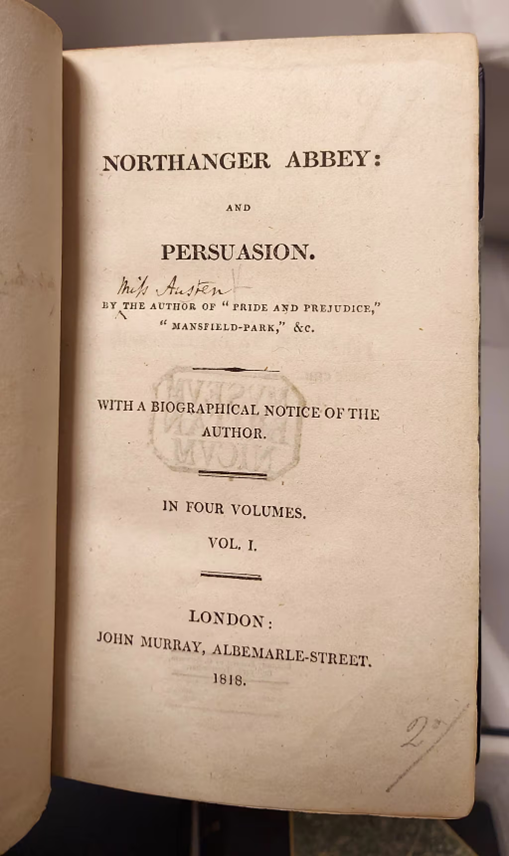
Image Credit: The British Library, 1818 Northanger Abbey: and Persuasion title page, Jane Austen credited by a later owner.
It was not however until Cassandra and her brother, Henry, posthumously published Persuasion and Northanger Abbey in 1818, that Austen would receive public credit as their author. She had died the year before, at the age of just 41, leaving several works tantalisingly unfinished, and the memory of her as an individual was reliant on the testimony of her family. Even then, it was only in 1832 when Richard Bentley republished her books as illustrated volumes that they truly became a commercial and literary success. It is therefore easy to understand why this silhouette of a woman, whose voice lives on primarily through her fictional offerings, still resonates with her readers today.
Over two centuries on, Austen’s novels are still widely read and regarded as classic pieces of English literature, celebrated amongst contemporary literary greats like the Brontës, George Eliot and Charles Dickens. Altogether, her books – completed or otherwise – have been adapted into over fifty productions for theatre, television and film, including much loved classics like the BBC’s serialisation of Pride and Prejudice (1995, the superior one – I will die on this hill) and even loose inspiration for recent regency romance media, like Bridgerton(2020-present).
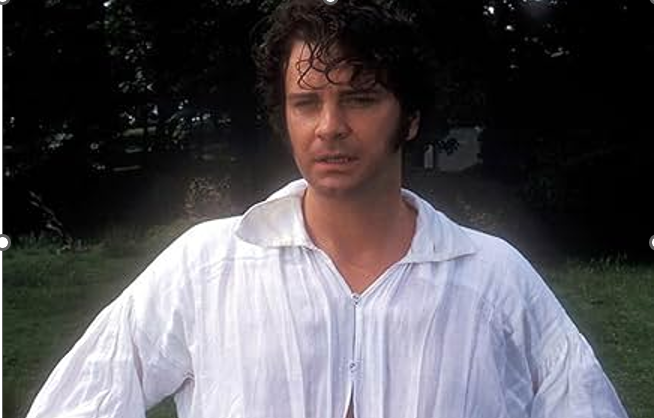
Image Credit: BBC, 1995. Colin Firth in Pride and Prejudice
Austen herself has multiple dedicated museums, such as Jane Austen’s House and the Jane Austen Centre, the latter of which hosts an annual Austen festival, where fans – known as Janeites – dress in regency clothing, dance in reenactment balls, shop for bonnets and attend dedicated (re-)tellings of her stories. And around the world, such Janeites are gathering to celebrate Jane Austen on her 250th birthday.
To read more about Jane Austen’s works, life and legacy, see:
https://www.bl.uk/stories/blogs/posts/jane-austen-names-and-notability
https://www.bbc.co.uk/news/articles/cy4mppx4w1no
https://janeaustens.house/display/austenmania/
Edited by Nadia Bishop-Broadhurst