
Written by Tatum Logan, 1st Year History and Innovation
Content Warning: This article contains discussions of sexual violence
On the 21st of November 2025, thousands of South African women participated in the G20 Women’s Shutdown by refraining from work and partaking in marches. Echoing the 1956 Women’s March against Apartheid’s Pass Laws, protesters gathered outside the Union Buildings in Pretoria. This time, women were clad in purple, the colour of justice, dignity and self-respect. Protestors demanded that the government declare Gender Based Violence (GBV) and Femicide a National Disaster. Femicide is a decades-long crisis: a 2004 SAMRC study showed that in 1999, a South African woman was murdered by her intimate partner every six hours. The recent reinvigoration of resistance came after the South African Police Service (SAPS) reported a shocking 12,787 sexual assault cases from July to September 2025.
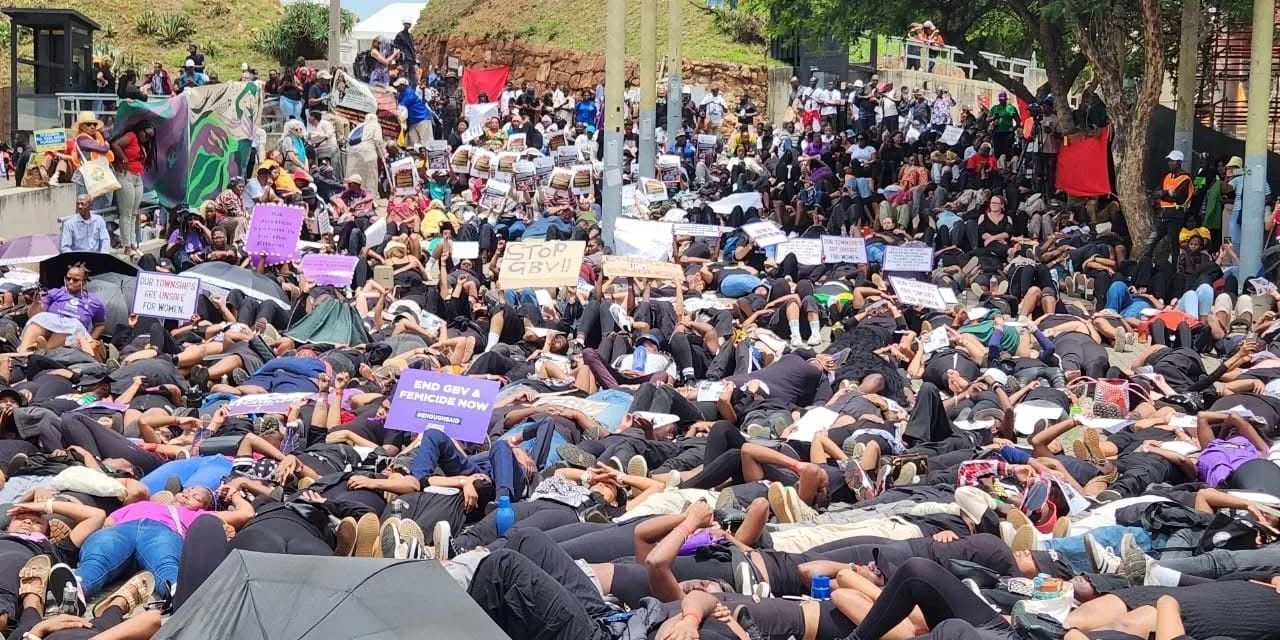
Figure 1. G20 Women's Shutdown, Outside Union Buildings in Pretoria, SABC News, 2025
President Cyril Ramaphosa acknowledged that GBV and Femicide were National Disasters in a speech on 27 November 2025. This classification requires the government to provide for an ‘integrated and co-ordinated disaster management policy' and provide ‘rapid and effective response to disasters’. Yet, in the three months between July and September 2026, 12 women’s bodies were found in Ekurhuleni, Johannesburg. Today, South Africans are left questioning why the state continues to struggle to prevent these atrocities. In this article, I will discuss the historical context for GBV in South Africa and analyse the ongoing reasons behind it.
South Africa and Apartheid
South Africa is perhaps most known for being ‘the country where Apartheid happened’. Apartheid was a white supremacist regime, upheld by the all-white Nationalist Government, which permeated the country’s legal, economic, political and social systems. Apartheid was toppled in 1994, after Nelson Mandela won the presidency in South Africa’s first democratic election. Mandela’s party, the African National Congress (ANC), played a pivotal role in defeating the regime.
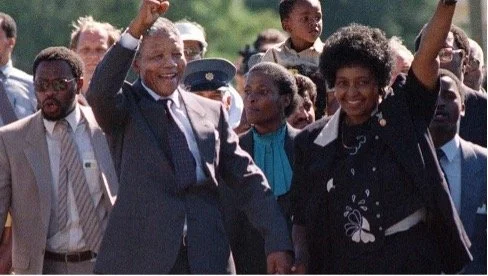
Figure 2. Nelson Mandela Freed from Prison on Robben Island, eNCA, 1990
Apartheid creates two primary dilemmas when investigating the government's role in addressing GBV in South Africa. The first is that there are no reliable studies of either GBV or femicide during Apartheid. This is partly because the Nationalist Government did not care to investigate the welfare of the Black population, and because it enforced strict censorship, which would have barred any independent organisations from studying this. This makes it hard to assess long-term trends in GBV in South Africa, particularly the extent of the crisis pre-democracy. Secondly, the ANC government inherited a national infrastructure which was established to serve only the 12.7% of the population categorised as white by the 1950 Population Registration Act. Extending this system to provide police protection, pensions, benefits, and other essential services to approximately 45 million people, within the confines of a developing economy, would be immensely challenging for any government. These inherited structural inequalities complicate assessments of the ANC government's effectiveness in addressing GBV.
Complacency and Corruption within the ANC
The ANC's tireless effort to defeat the National Party has not been forgotten by South Africans today. There remains an undeniable loyalism to the ANC, particularly amongst older voters who vividly remember the struggle of segregation. Since 1994, the ANC has won every General Election by large margins. In 2024, out of 70 parties who entered, it won 40.8% of the vote to re-elect President Ramaphosa. Perhaps the continual alliance among citizens to the ANC means that the Party is not overly afraid of being ousted, should it continue to fail to respond to atrocities towards women.
Additionally, corruption scandals have embroiled the democratic government since 2004, which distracts from key issues amongst citizens. For instance, Former President Jacob Zuma still owes the state almost R29 000 000 (£1.2 million). State capture redirects needed resources and media coverage away from other issues, thus perpetuating the ANC's failure to address GBV.
Ineffectiveness of Policing
SAPS is tragically under equipped, which makes it very difficult for police to operate efficiently to tackle GBV. There is no centralised online police database for managing cases, and up to 30 police share a single computer. As many stations lack reliable telephone access, many emergency calls are left unanswered and collaboration between police stations is difficult. SAPS' budget is also woefully small, equating to £5,680,000 in 2025/6. The UK spent £19,892,000 in the same period. For a country which is home to five of the ten most dangerous cities in the world according to their crime index, this is a cause for concern, and a key reason that GBV is unable to be curtailed.
The Relationship between Poverty and Assault
There is a strong link between South Africa’s dire economic conditions and sexual violence against women. Women living in poverty are twice as likely to experience domestic violence and assault; a particularly concerning statistic given StatsSA’s finding that 38% of South Africans are impoverished. Warwick researchers have also found that unemployed men are over 30% more likely to perpetrate domestic violence. This is pertinent to South Africa, where unemployment stands at 33.6% and youth unemployment at 47.4%.
Historic reasons for South Africa’s Struggling Economy
During apartheid, education was segregated and people of colour had severely reduced access to and quality of education compared to white South Africans. This restricted the professions they could enter and limited their earnings. The Group Areas Act of 1950 reserved 83% of all land for white South Africans and led to the forced removal of 630,000 people of colour from their homes without compensation. The legacy of Apartheid has thus contributed to persistent racial disparities in wealth, education and commercial connections, perpetuating economic inequality. This inequality exacerbates frustrations and underpins further GBV cycles.
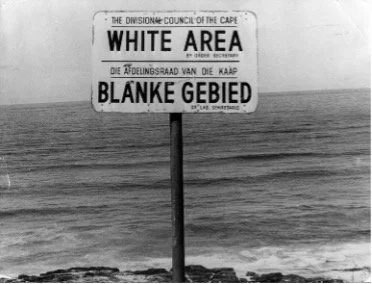
Figure 3. Sign in Cape Town declaring Beach White Only, accessed via the BBC
Cultural Factors Contributing to GBV
The gender hierarchy established during colonialism and perpetuated by the apartheid state was deeply patriarchal, and normalised men having legal and social control over women. In addition, the extreme violence towards people of colour which was displayed by the authorities and some white citizens during these eras has, in turn, somewhat normalised violent suppression within the country's zeitgeist. Resultantly, violence has infiltrated the household.
Some practices by various tribes within the country can have negative impacts on the treatment of women too. For instance, lobolo, a customary practice of paying a price for a woman's hand in marriage to her father, may (in some contexts) foster unequal power dynamics within marriages.
Whilst there is no single explanation for the continuously high rates of femicide and GBV in South Africa, Apartheid has undeniably played a large part in its normalisation, and in the government's persistent inability to curtail it.
Furthter Reading:
Causes of Gender Based Violence in South Africa: A Deep Dive Analysis
Unemployment substantially increases domestic violence
Historical Overview of Black Resistance, 1932-1952 - The Congress of the People and Freedom
Charter Campaign by Ismail Vadi, New Delhi, 1995 | South African History Online
Edited by Bea Vivian, Editor-in-Chief